NCRG Conference: Building A Partnership – Researching Native American Populations
The first day of the14th annual NCRG Conference on Gambling and Addictionconcluded with a few breakout sessions, including one that took a close look at building partnerships with Native American populations.
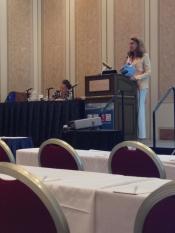
The session began with a short presentation fromKate Spilde, chair of the Sycuan Institute on Tribal Gaming and associate professor at San Diego State University. Ms. Spilde provided two key resources on building successful research partnerships with tribal communities: the National Congress of American Indians (NCAI) report,“Walk Softly and Listen Carefully,”and the Betty Ford Institute’s “Seme7 (Non-Native) Counselor in a First Nations: A Story of Professional/Personal Growth and Transformation.”
She noted that the tribal gaming industry has brought income and employment benefits to both tribal and non-tribal communities. The economic and social indicators reveal improvements in education attendance and individual/family income, and poverty and unemployment often decreases. However, these good points often mask the long-term problems of tribal gaming and make it more difficult to uncover them.
Ms. Spilde emphasized that research is a key tool of tribal sovereignty, adding that efforts to address longstanding issues, such as health disparities for American Indians and Alaska Natives, have increasingly used research partnerships.
She also noted several tribal community concerns when conducting research in their communities, including:
- Research needs vary by community.
- An inability for researchers to identify the pressing needs of community members
- Recovery needs within tribal communities may not mirror mainstream public policy questions
- Non-Natives bring intervention frameworks and tools that may not be appropriate or meaningful to tribal members
- Key qualities to look, listen and learn
While it is important for researchers to look, listen and learn, Ms. Spilde also suggested investigators should keep various challenges in mind:
- Tribal leaders are community members; many of them also struggle with addiction both personally and within their families.
- There is strong political pressure to maintain a positive image of the tribe
- Poor understanding among clinicians and researchers of addiction syndrome in Indian Country; are recovering alcoholics more vulnerable to gambling than active ones?
- Tribal community-level factors often not included in public health model in Indian Country (i.e. rate of unemployment, presence/absence of community resources/social agencies, lack of recreational outlets)
- Difficult to capture impacts of the stress of reservation life, including grief from residential/boarding schools.
Following her presentation, Ms. Spilde also introducedMiriam Jorgenson, Ph.D., research director for the Native Nations Institute for Leadership, Management and Policy at the University of Arizona; research director for the Harvard Project on American Indian Economic Development at Harvard University; and a member of the NCRG’s Scientific Advisory Board.
Dr. Jorgenson started by pointing out that there is far too much research “on” and not enough research “with” or “for” tribal communities. She emphasized that relationships matter, and that is why it is important to conduct researchwiththese communities.
To reiterate point, Dr. Jorgenson shared a quote from the NCAI report:
“Trust takes time. You need to prove—as a researcher or as an outsider—that you can actually function as a positive member of that community; and there’s no way to do that without becoming a part of that community. That takes time.”
Finally, Dr. Jorgenson noted that often, both universities and tribal communities have protocols already in place to help establish and continue the partnership, and if those protocols don’t exist, it is important to establish them prior to facilitating the partnership. She also provided some of the tangible elements of a successful research partnership, including money and resources, in-community partnerships, advocacy for the tribe with funders, products for the community and pro-bono work for the community.
Following Dr. Jorgenson, John Iyott, a counselor with theIndian Health Service, shared some key elements for engaging in successful partnerships. First, he noted that as with any other culture, it is understand the historical trauma that the tribal community has endured before entering into a partnership. He also noted that all tribes are different, and it is important to understand their culture when entering into a partnership.
The session concluded with an engaging question and answer session that left participants interested in connecting with each other for future partnerships and endeavors.
NCRG staffConference on Gambling and AddictionNative American PopulationsNCRG Conference on Gambling and Addictionpartnerships