
New Research Tests Treatments For College Students With Gambling Disorders
For college students, fall can be a time where they place bets on college football games and arrange their lineup in their fantasy football leagues. Researchers have found that about 75 percent of college students have gambled in the past year and about 6 percent have experienced problems with their gambling (Barnes, Welte, Hoffman, & Tidwell, 2010). One recent study has started to address this issue by putting to the test two promising treatment methods for college students experiencing gambling problems in a randomized controlled trial (RCT) (Larimer et al., 2011).
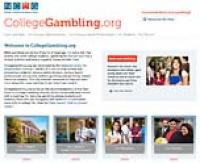
This study is of special interest to us at the NCRG because werecently fundedone of the researchers to develop an online version of a personalized feedback intervention, one of the treatments tested in this article, for our web-based resource about gambling on college campuses:www.CollegeGambling.org.
The study, published recently in the journalAddiction, randomly assigned 147 students who reported having at least three symptoms of gambling disorders to one of three groups. Two of the groups received treatment, with the first group attending a 60 to 90 minute in-person personalized feedback intervention (PFI). PFIs are based on the theory that most people with gambling problems think that the general public gambles as much as they do (this belief is called “perception of gambling frequency”) and when they find out that they gamble much more than most they will curb their behavior to be more in line with the average.
The second treatment group attended four to six one-hour group sessions of a cognitive behavioral intervention (CBI). The CBI gave information about topics such as relapse prevention and illusions of control (a commonly held overconfidence in one’s ability to control event outcomes), while also teaching skills like coping with triggers and assertiveness. The third group was an assessment-only control (AOC), meaning that they received no treatment but were assessed at the same times and in the same ways as the treatment groups.
The researchers found that at the six-month follow-up, subjects in both treatment groups reported significantly reducing their gambling, having fewer gambling related symptoms, and experiencing fewer gambling related negative consequences. Additionally, the PFI group experienced reduced perceptions of gambling frequency norms and the CBI group experienced reduced illusions of control. The researchers concluded that both interventions might be helpful in reducing disordered gambling among college students.
To find out more about this study, visit thejournal’s website. For more information about college gambling, visit CollegeGambling.org. Also remember to share any thoughts or questions in the Comments section below.
References
Barnes, G. M., Welte, J. W., Hoffman, J. H., & Tidwell, M.-C. O. (2010). Comparisons of gambling and alcohol use among college students and noncollege young people in the United States.Journal of American College Health: J of ACH,58(5), 443–452. doi:10.1080/07448480903540499
Larimer, M. E., Neighbors, C., Lostutter, T. W., Whiteside, U., Cronce, J. M., Kaysen, D., & Walker, D. D. (2011). Brief Motivational Feedback and Cognitive Behavioral Interventions for Prevention of Disordered Gambling: A Randomized Clinical Trial.Addiction (Abingdon, England). doi:10.1111/j.1360-0443.2011.03776.x
NCRG staffResearch Updatecollege studentscollegegambling.orggambling disordersresearchresponsible gaming